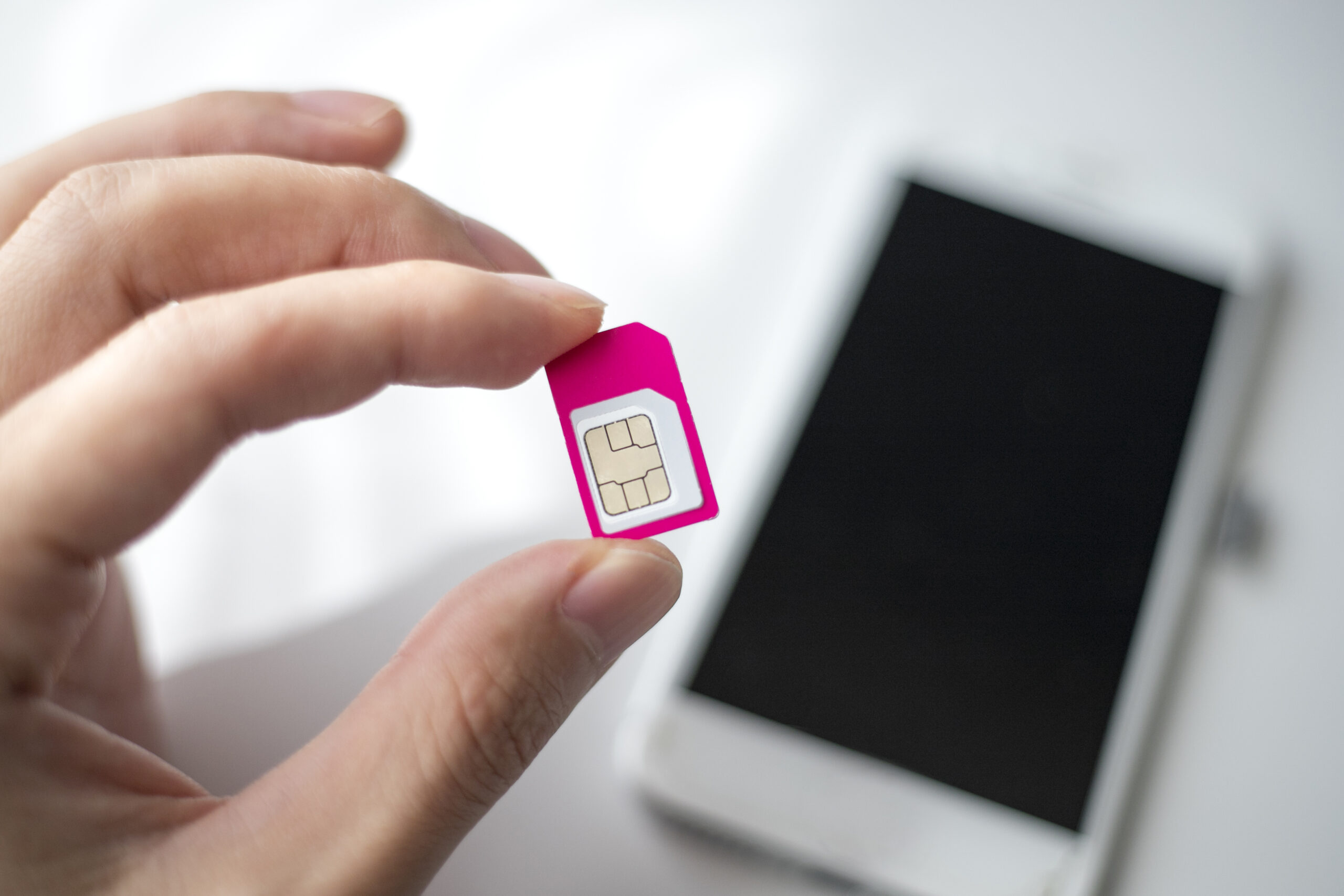
Many UK businesses still let staff use their personal mobile contracts, or pick up cheap consumer SIMs, to handle work calls, emails and apps. On the surface it can look like the path of least resistance employees already have phones, and consumer tariffs often advertise low headline prices.
Once you factor in cost control, tax treatment, data protection and support, however, that approach starts to look much less attractive. Personal contracts blur the line between work and private use, hide spend across multiple bills, and leave the business exposed when staff leave or devices go missing.
A business SIM, provisioned through a managed mobile contract, gives you a centralised, accountable way to put connectivity on every team member’s phone without the hidden costs and risks. This guide explains the practical differences between business SIMs and consumer or personal SIMs, and where the savings and risk reductions are for UK organisations.
What is a Business SIM (and How it Differs From a Personal SIM)?
A consumer or personal SIM is a mobile contract sold to an individual, in their own name, on a tariff aimed at one user. Billing, ownership of the number, credit checks, support arrangements and any roaming benefits all sit with that individual.
A business SIM is provisioned under a business mobile account. The contract is in the company’s name, multiple SIMs are managed centrally, and the tariffs are designed for organisations rather than households.
Typical features of a business SIM include:
- Pooled or shared data across all users on the account
- Customisable tariffs sized to actual job roles, from light users to heavy data consumers
- A central admin portal for adding, removing and managing lines
- Access to dedicated business support teams, and the comfort of business-standard SLA Agreements
- Clear VAT treatment, with proper company invoices
In short, business SIMs are designed to give finance, IT and operations leaders visibility and control over a fleet of mobile users, rather than treating each phone as a standalone consumer purchase.
Cost: Why Business SIMs are Often Cheaper
Comparing a single consumer SIM-only deal against a business SIM tariff can be misleading. The headline price per line might look similar, or the consumer tariff might even appear lower. The real cost picture only becomes clear when you look at the whole estate.
Pooled Data Versus Duplicated Allowances
Consumer SIMs come with rigid, per-user allowances. If one staff member uses 2GB and another uses 40GB, you typically end up either over-buying for everyone (so the heavy user does not run out) or paying overage charges and reimbursements for the people who go over.
Pooled-data business plans aggregate everyone’s allowance into a shared bucket. Light users effectively offset heavy users, which means you can right-size the total bundle rather than buying for the worst case on every line.
Avoiding Unexpected Phone Bills
Employees on personal contracts rarely choose tariffs with business in mind. International roaming, premium-rate calls and out-of-bundle data are easy to incur and difficult to challenge after the fact. By the time the invoice lands, the business is often expected to pay it back.
A business mobile contract puts these controls back in your hands: spend caps per line, alerts when a user is approaching a threshold, the ability to block or allow specific call types, and clear policies on roaming. The result is fewer surprises in monthly costs.
VAT, Tax Treatment and Benefit-in-kind Issues
Where staff use personal SIMs and the business reimburses them, VAT recovery becomes complicated and the reimbursement may also be treated as a taxable benefit-in-kind, depending on how the contract is structured and current HMRC guidance. Always check with your accountant for your specific position.
A contract held in the company name and used solely for work generally allows clean VAT recovery on a single business invoice and removes ambiguity around personal benefit. That alone can change the comparison materially.
Risk: Compliances, Data Protection and Continuity Issues With Consumer SIMs
The cost case is one thing. For many UK organisations, the risk case is even more compelling.
GDPR and Data Protection
When work email, customer data, document apps and CRM tools sit on a personal contract and often on a personal device that the business does not control your data protection footprint becomes much harder to define. When a mobile device is lost, sold, or replaced without being securely wiped, sensitive business and customer information can be compromised, leaving your organisation vulnerable to data breaches and exposure.
Business mobile contracts, especially when paired with mobile device management, allow you to apply policies, remotely wipe lost devices, separate work data from personal use, and demonstrate to auditors and clients that you have proper controls in place.
Number Ownership
If a salesperson’s mobile number is on a personal contract, that number belongs to them, not to you. When they leave, customers and prospects keep ringing their personal phone, calls may be diverted to a competitor, and you have very little recourse.
Business SIMs put numbers on the company account from day one. When someone moves on, you re-issue the number to their replacement, retaining the customer relationships you have built around it.
Lost Oversight
Perhaps the biggest risk is the one finance, and IT leaders feel daily: lack of visibility. With a patchwork of personal contracts and consumer SIMs, no one has a clear view of who is on what tariff, how much data is being used, where roaming is happening, or which devices are connected to corporate apps. Decisions on spend, security and policy become guesswork.
A managed business SIM estate brings everything under one dashboard, with policy-driven usage, clear ownership and centralised reporting.
Support: What you get With a Business Mobile Contract That Consumer Plans Lack
Consumer mobile support is built for high volume and short calls. It works for individual customers, but it is rarely set up for an IT manager who needs to deal with a fleet of users at once.
Business mobile support typically delivers:
- 24/7 UK business support lines with shorter queues and faster resolution
- Dedicated account managers who already know your contract, tariffs and estate
- Clear service expectations on faults, SIM swaps and replacement devices
- Same-day or next-day device replacement options for business-critical roles
- Spend controls, roaming alerts and policy adjustments handled centrally
- Easy-to-use, Self-service portals to manage users, adjust data tiers and review data usage
For mobile and field-based teams in particular, that level of support keeps people productive instead of stranded. Every hour an employee spends on hold to a consumer call centre is an hour not spent serving customers, completing jobs or generating revenue a hidden cost that quietly adds up across the business.
Fidelity Group Provides Multi-network, Managed Business SIM Solutions
Fidelity Group is a UK business telecoms provider delivering structured, fully managed mobile estates to SMEs, mid-market companies and charities. We replace fragmented consumer arrangements with a single, accountable service designed around your usage profile, network requirements and commercial objectives.
When working with Fidelity Group, you can benefit from:
- Business SIM-only plans across multiple major UK networks, so you are not locked into one operator’s coverage and pricing
- Pooled and aggregated data plans tailored to actual usage, with strategically set data tiers per role
- Centralised billing, usage analytics and spend controls that make it easy to spot waste and risk
- UK-based business support and a dedicated account manager who understands your estate
- Mobile bill reviews and audits that quantify potential savings before any change is made
We typically start with a no-obligation review of your current bills and contracts. From there, we recommend the right network mix, tariff structure and management approach and provide ongoing optimisation as your team grows or usage patterns change.
Make the Move From Consumer SIMs to a Managed Business Mobile Estate
If your business is still relying on staff personal contracts, expense claims or a mix of consumer SIMs, the question is no longer whether a business mobile plan would be better. It is how much you are losing in cost, control and risk by waiting.
A short, structured review will tell you exactly where the gaps are, and what a properly managed business SIM estate would look like for your organisation.
Talk to Fidelity Group to bring your mobile estate under one professional, multi-network solution built for UK businesses, charities and growing organisations.